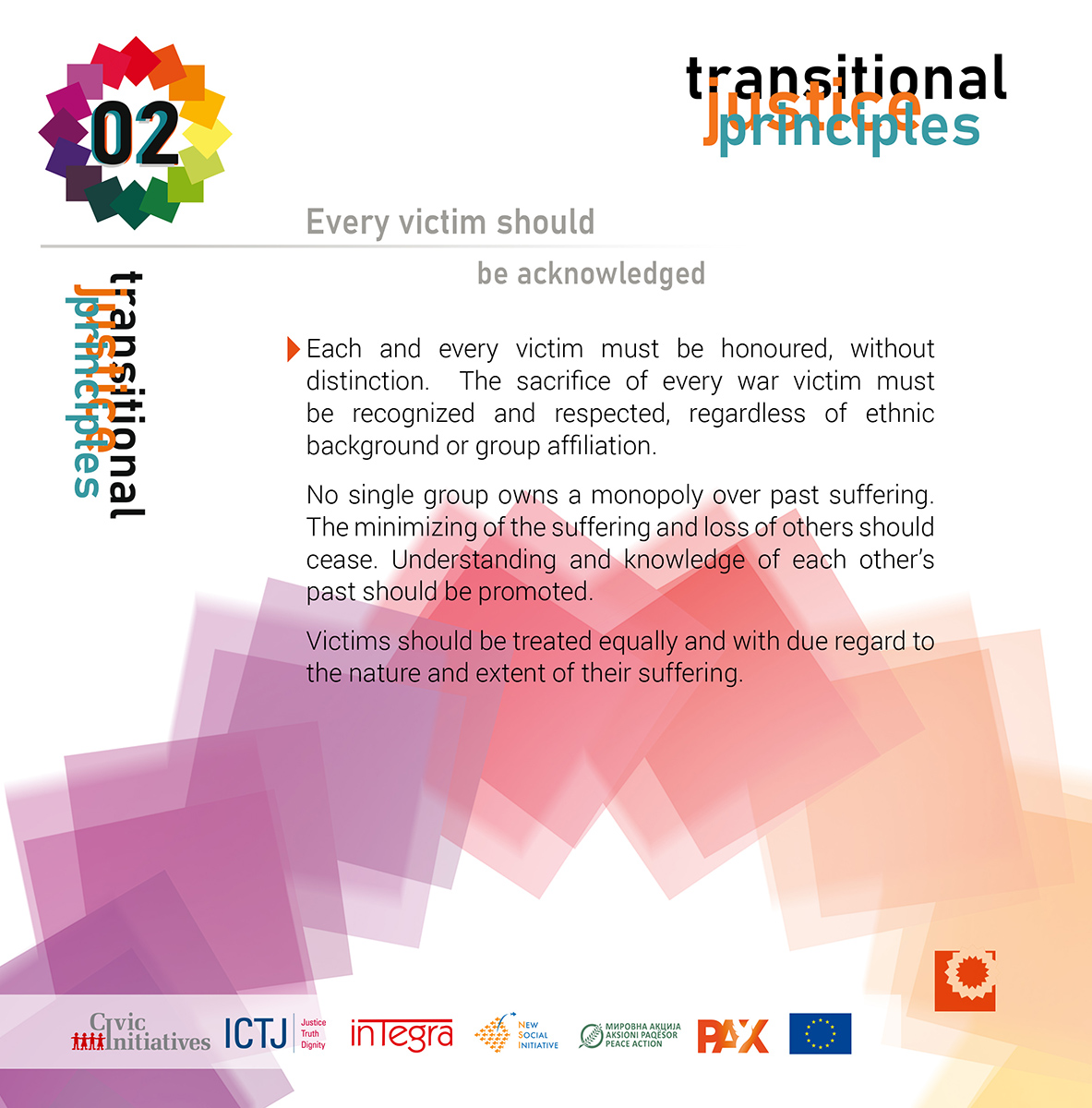
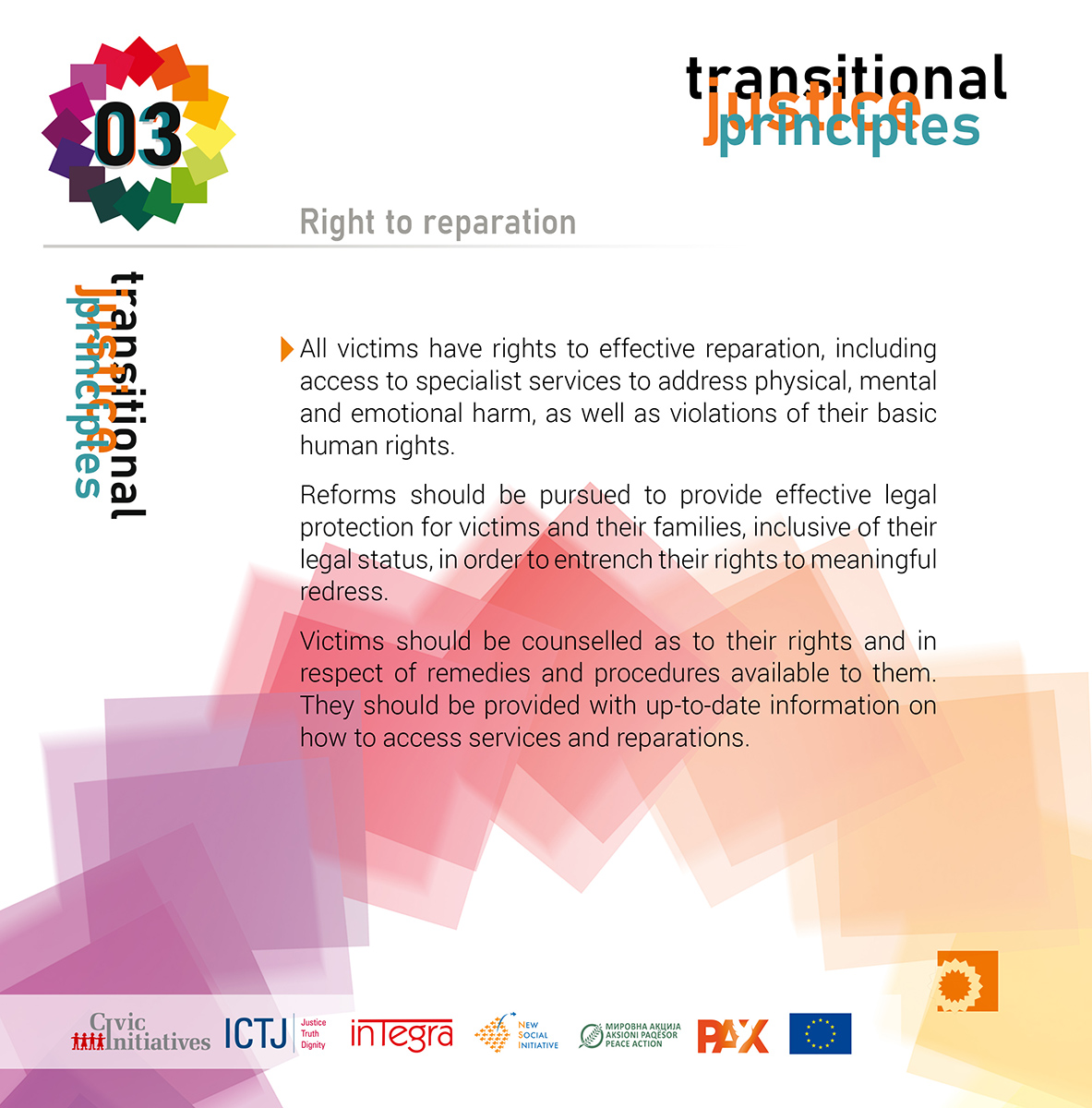
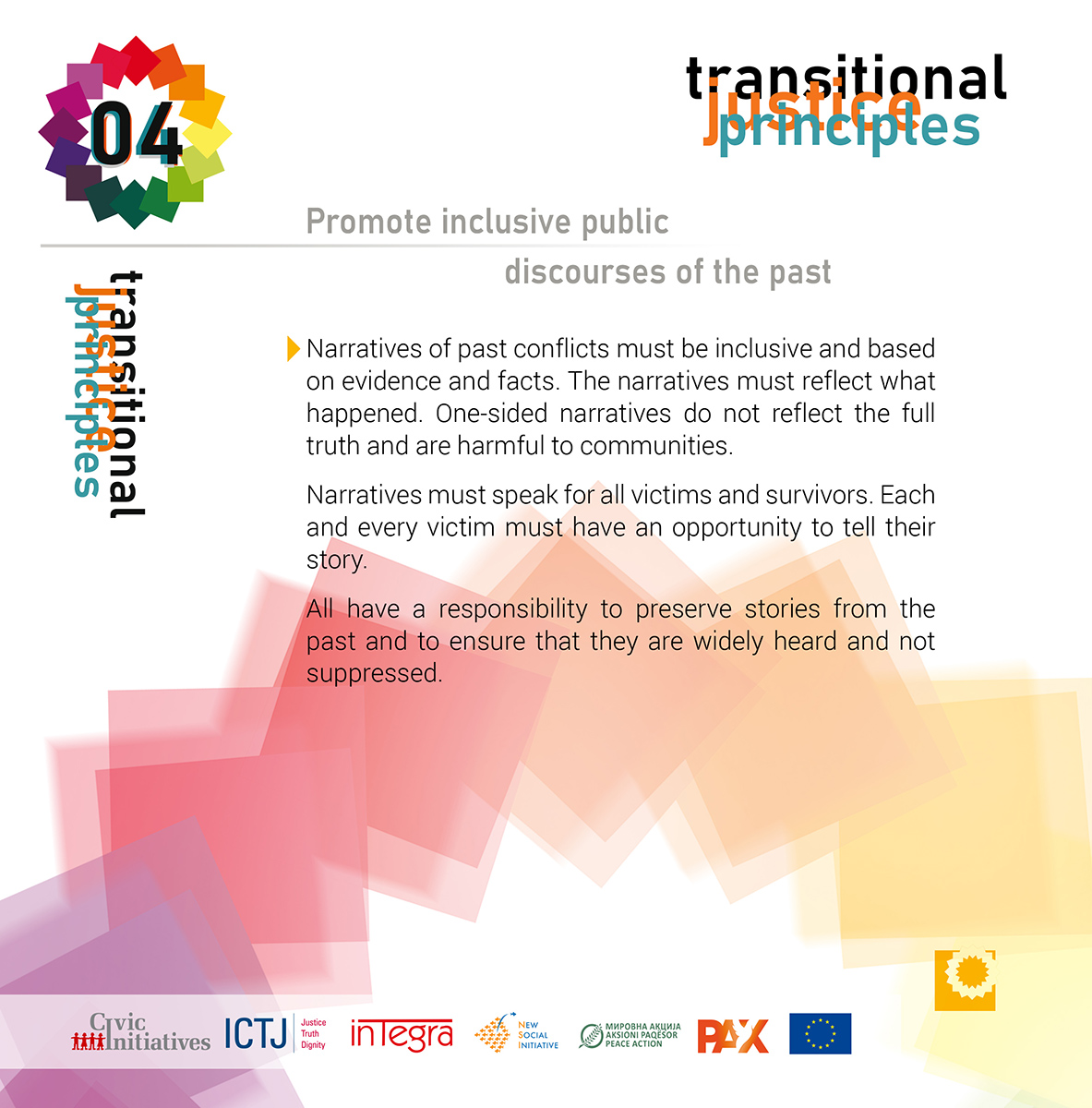
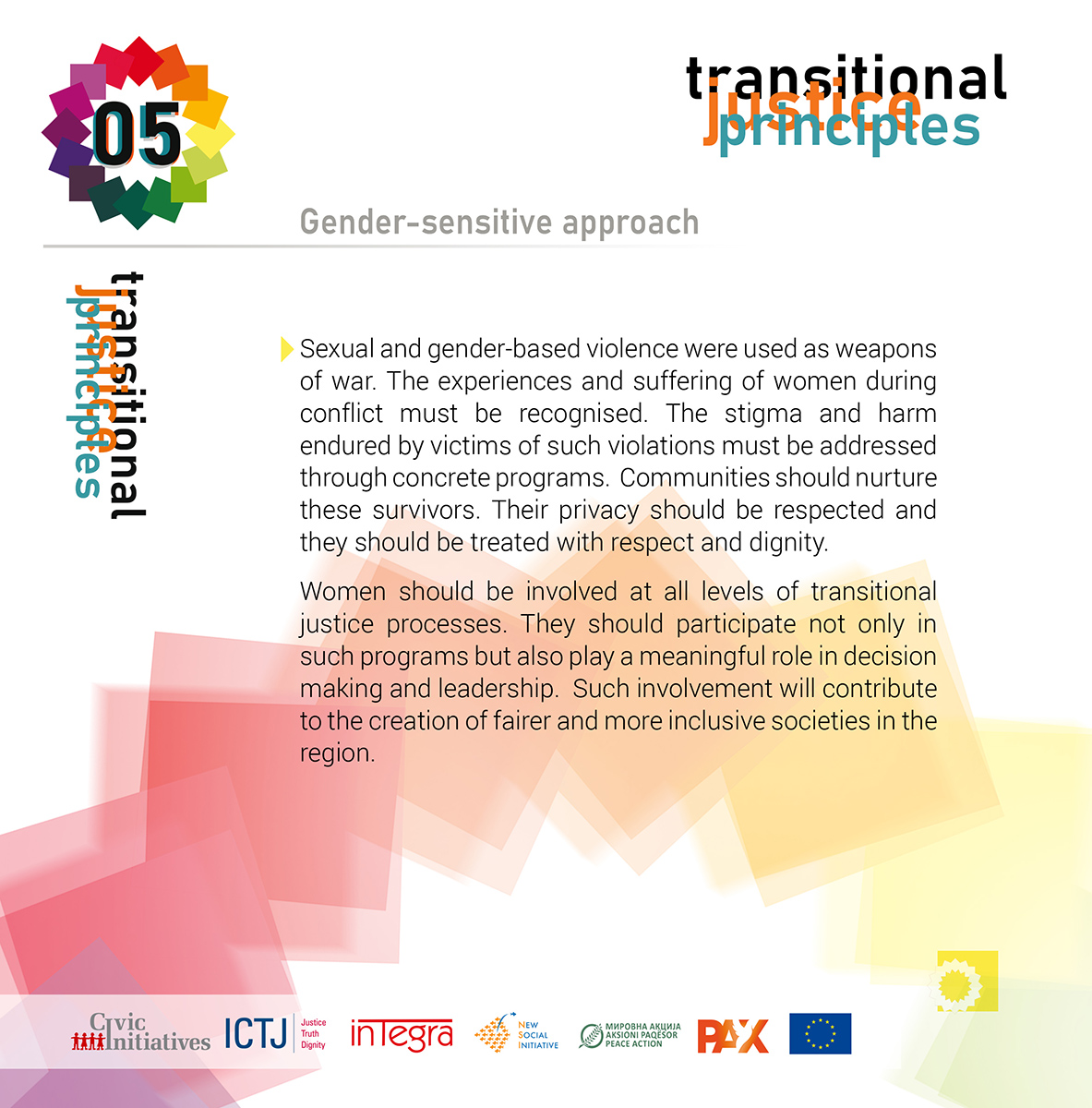
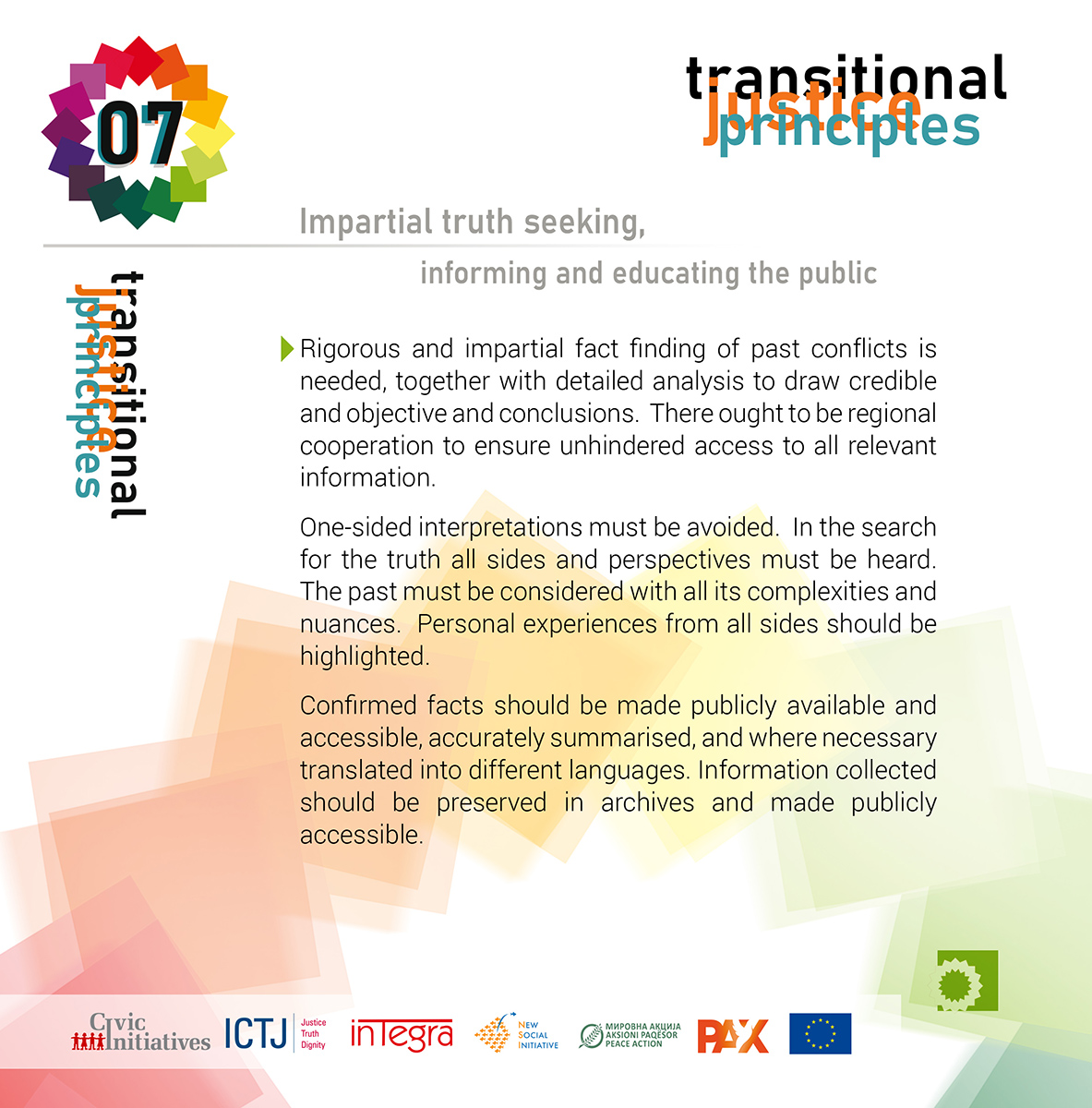
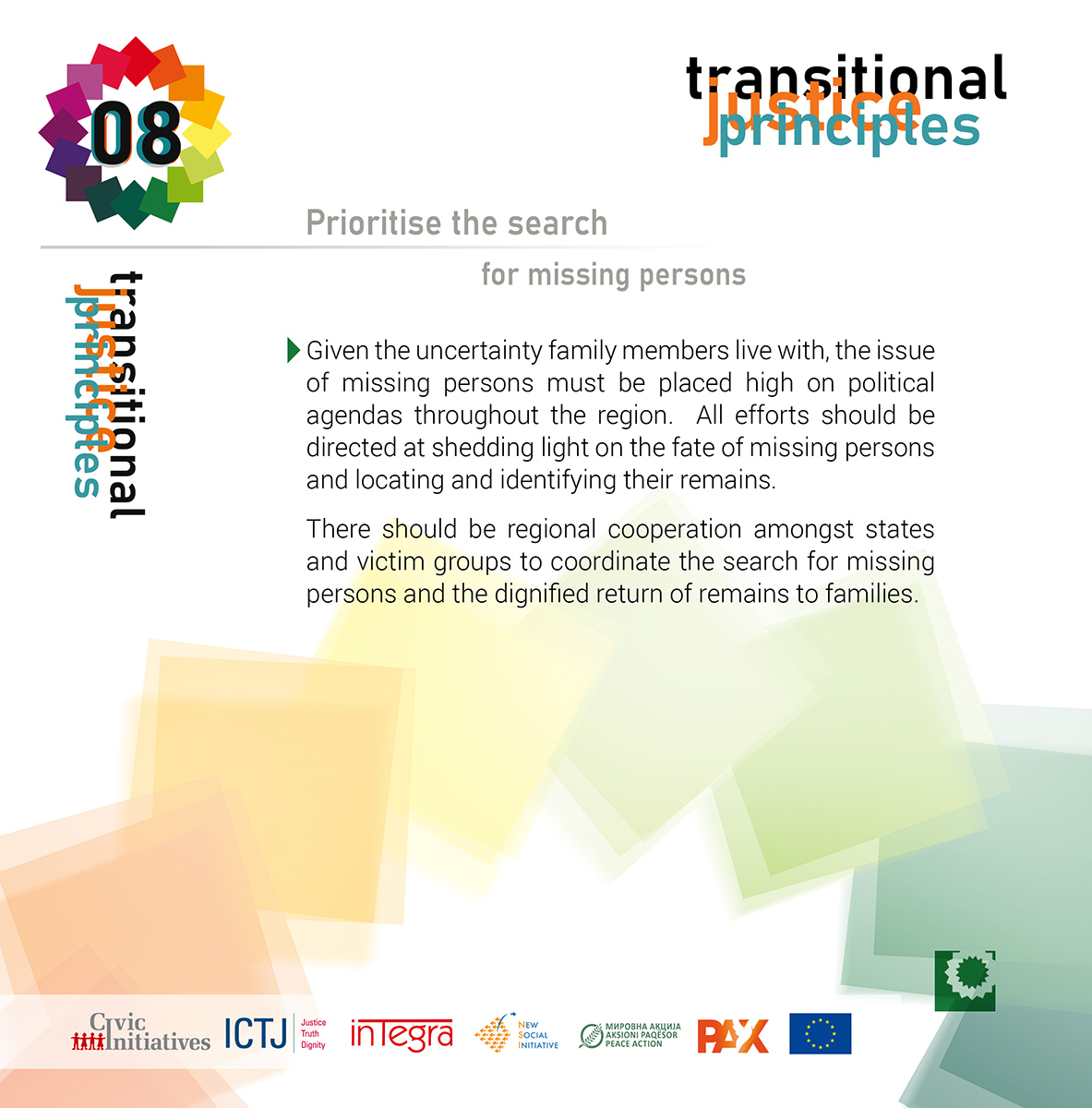
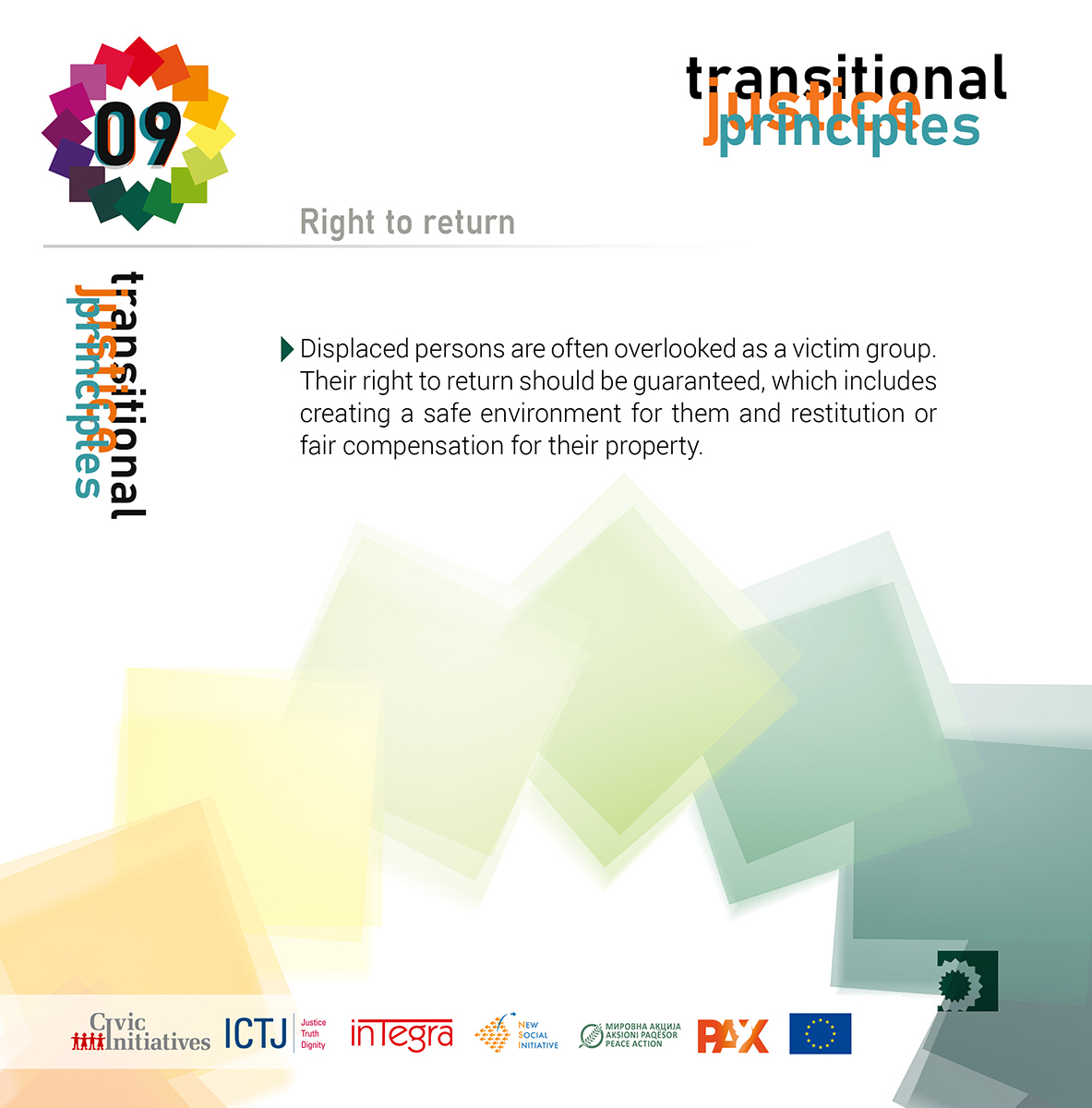
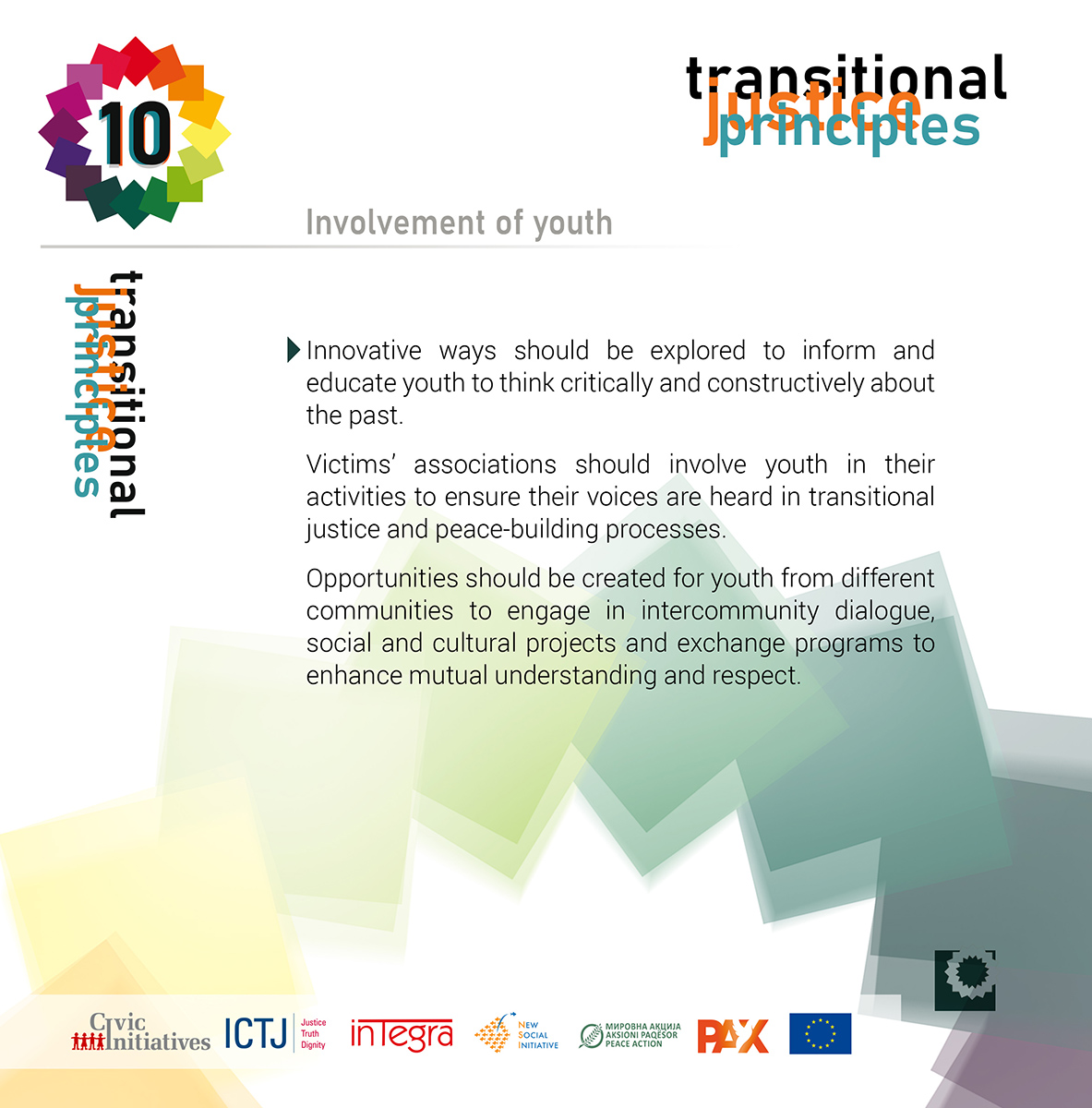
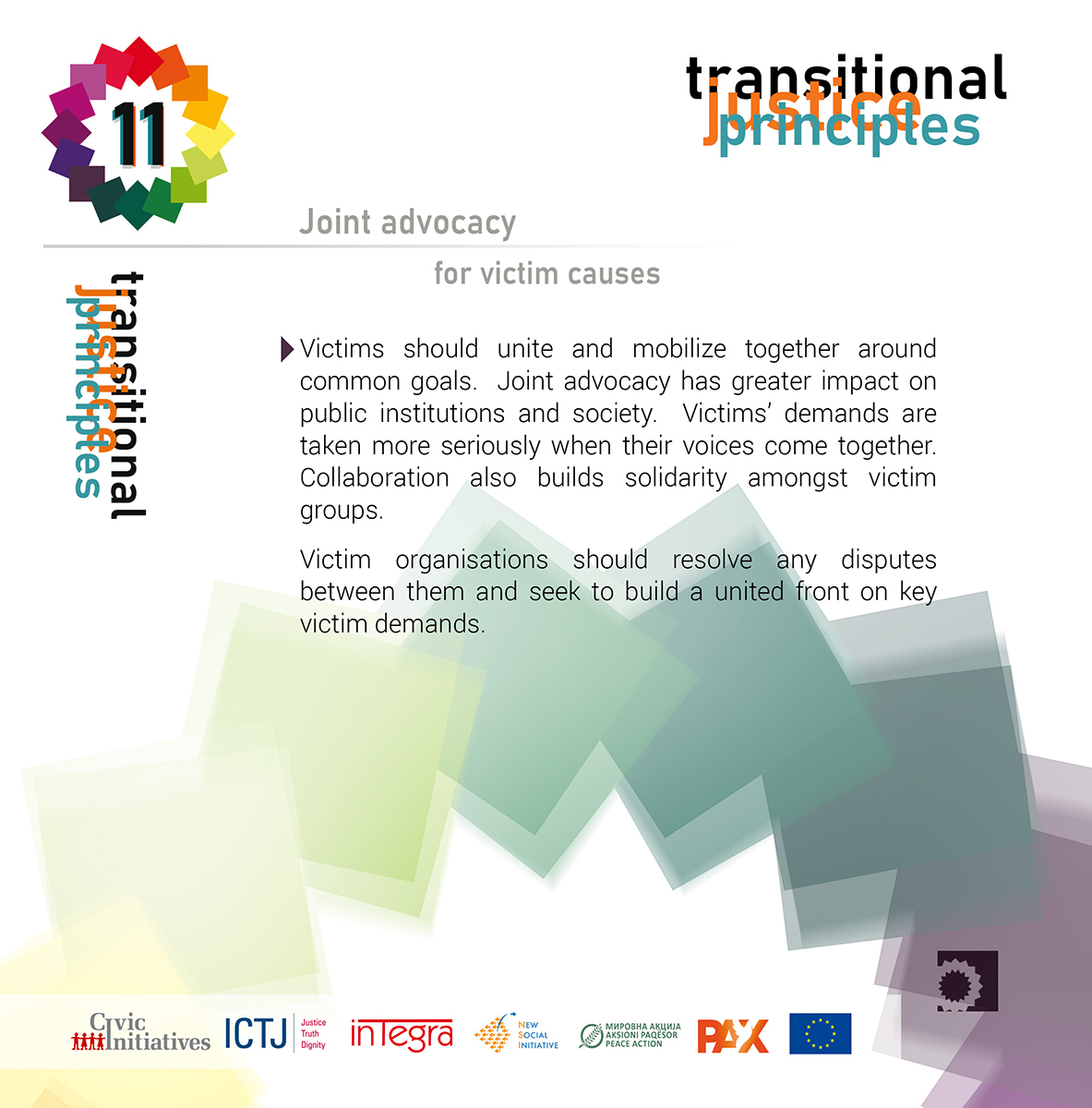
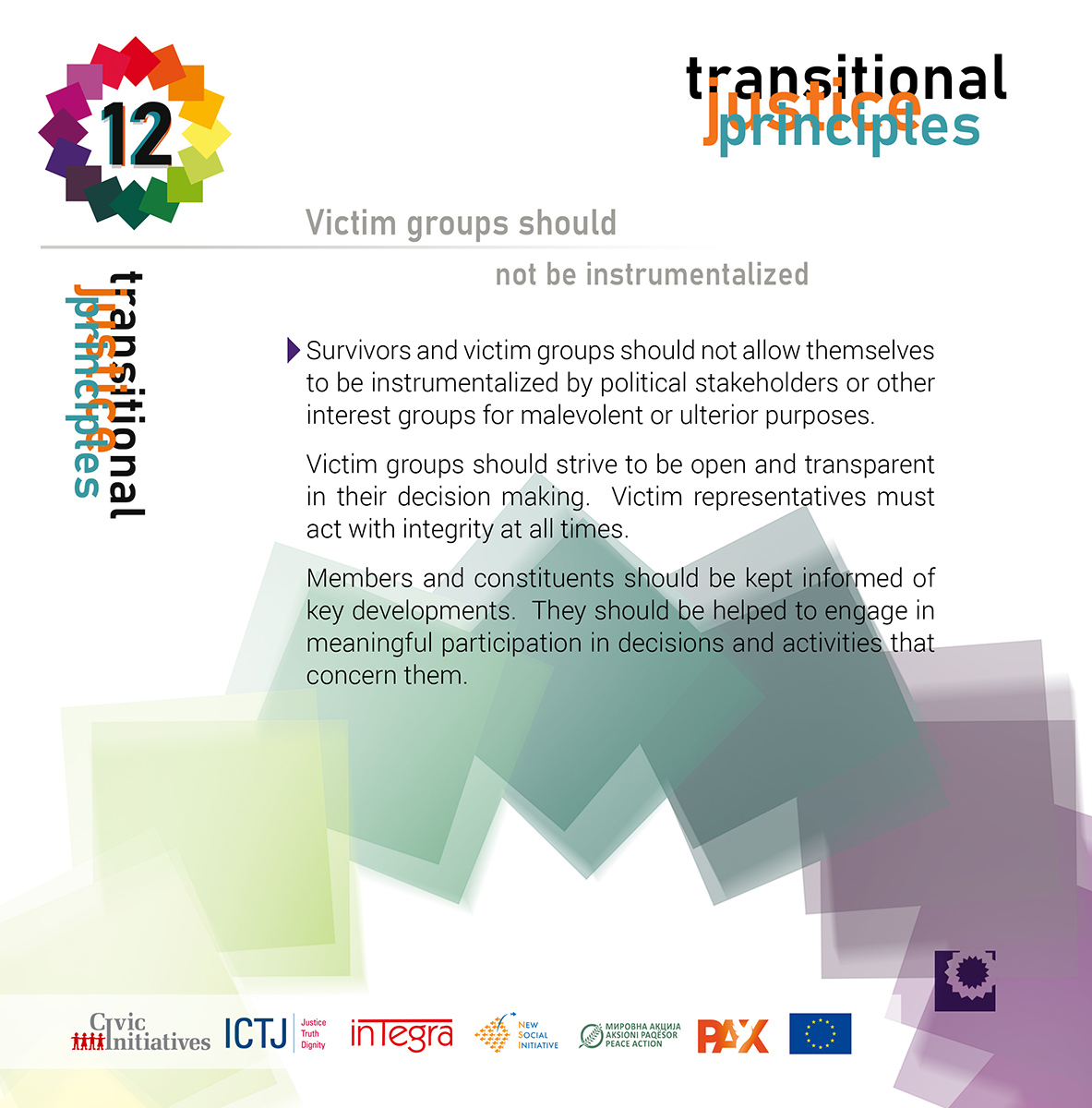
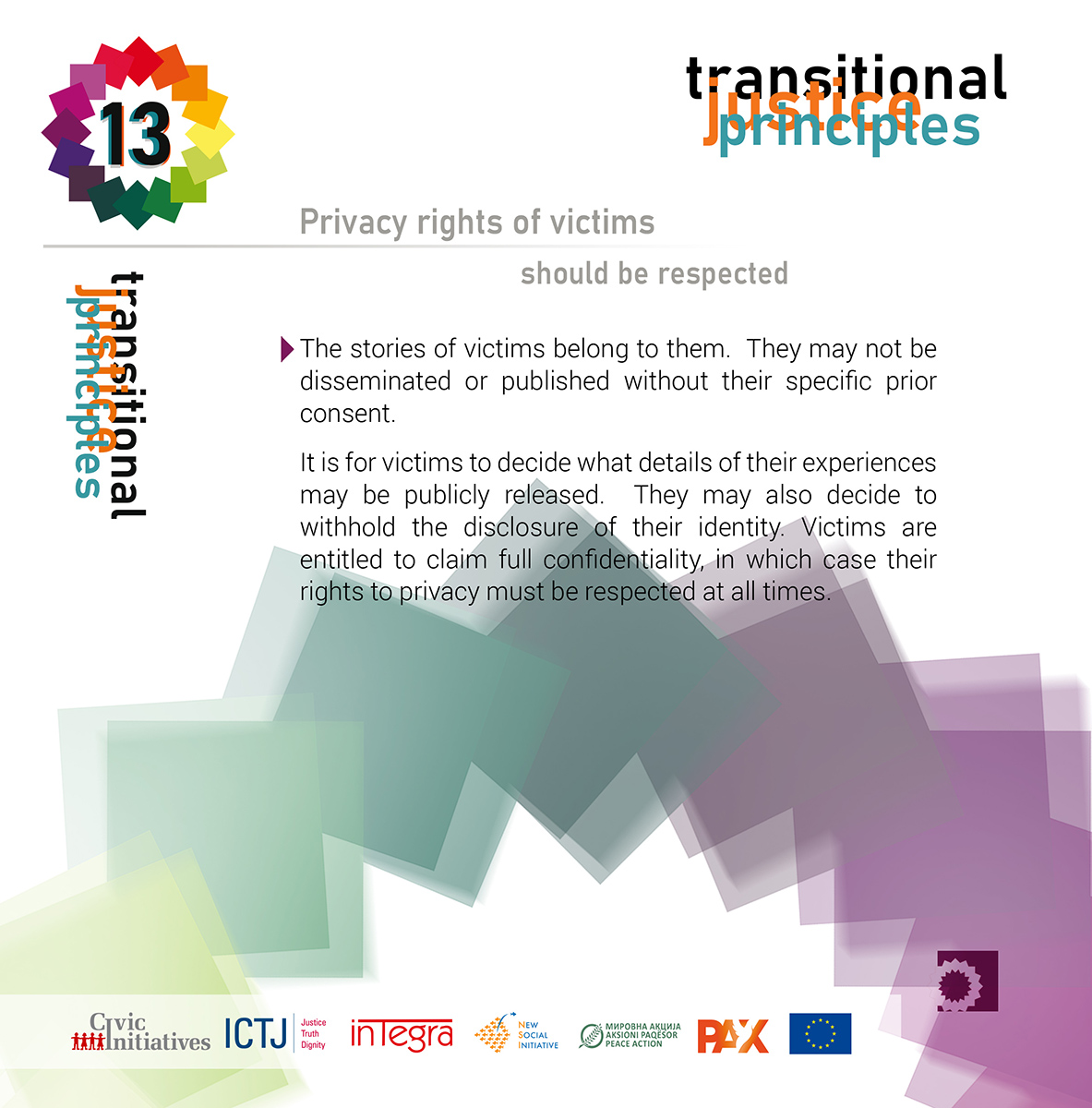
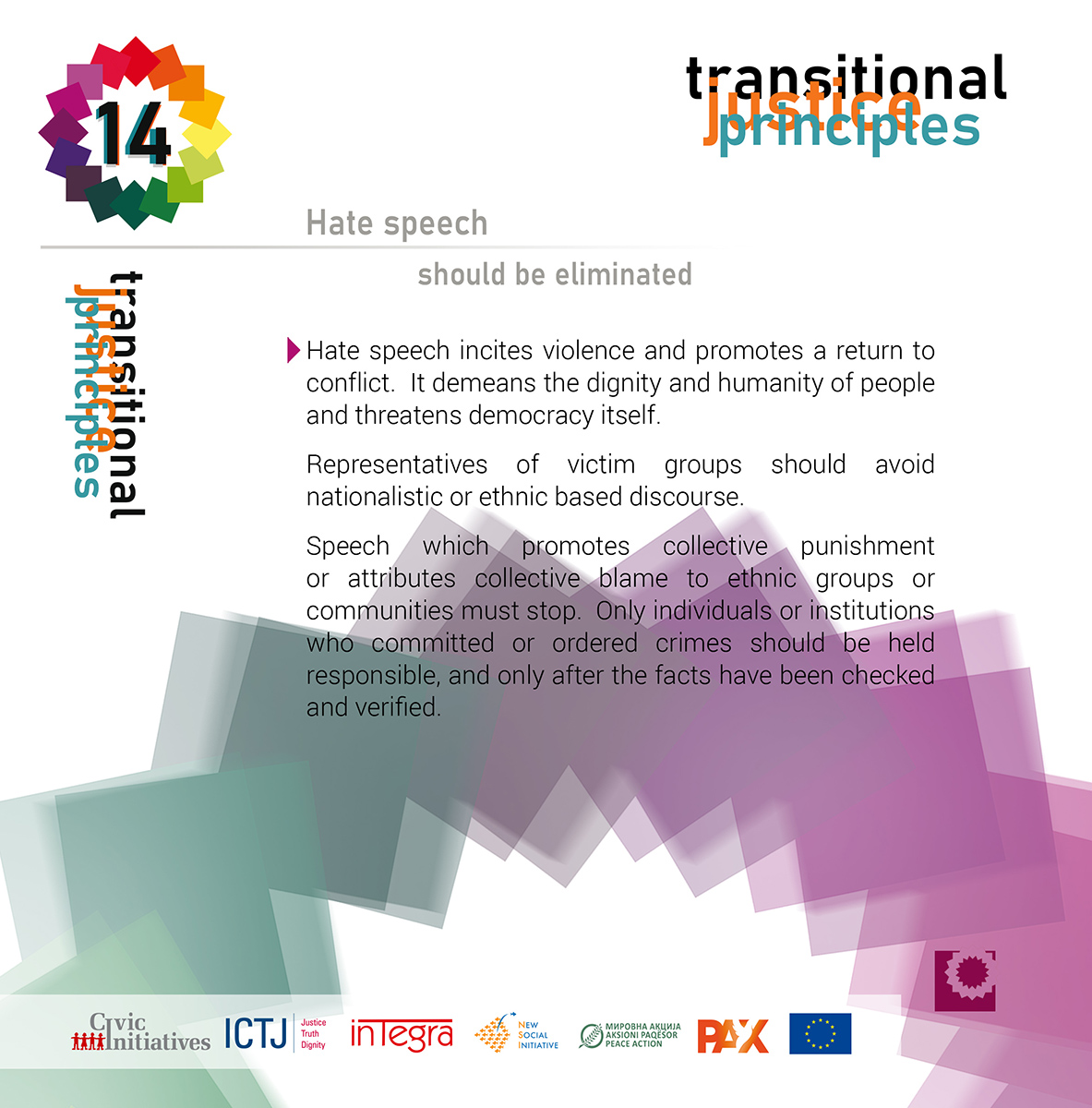
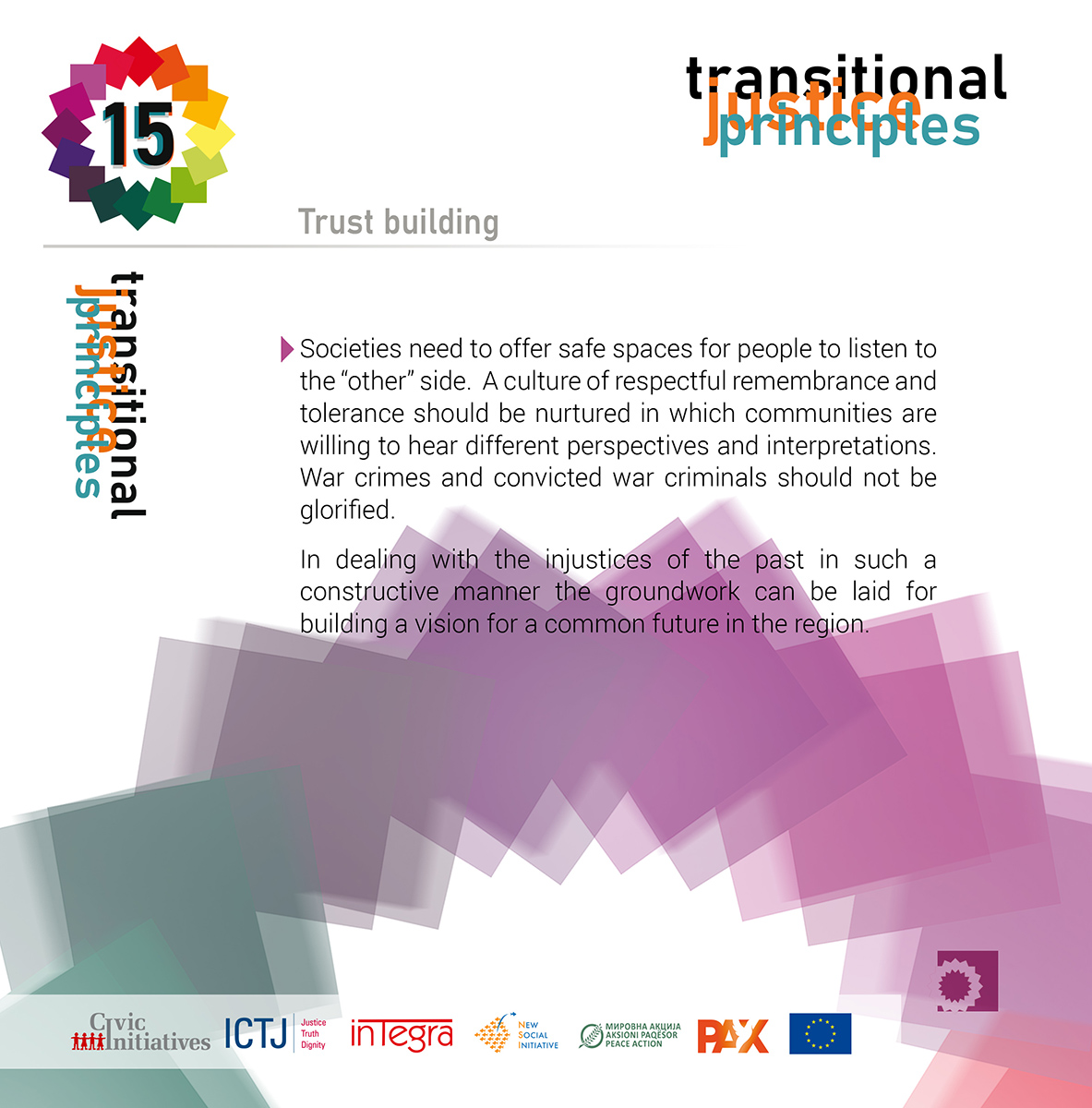
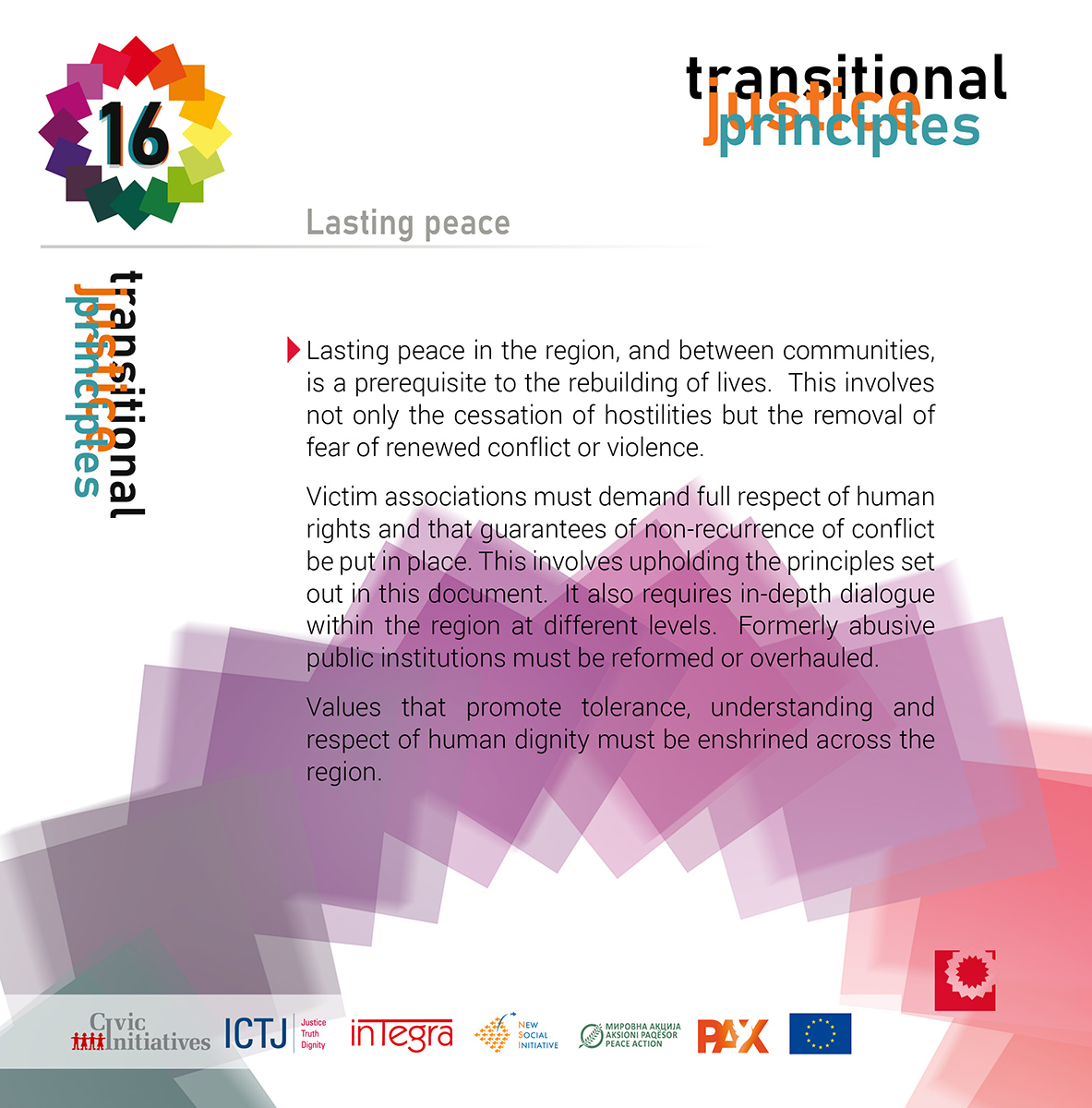
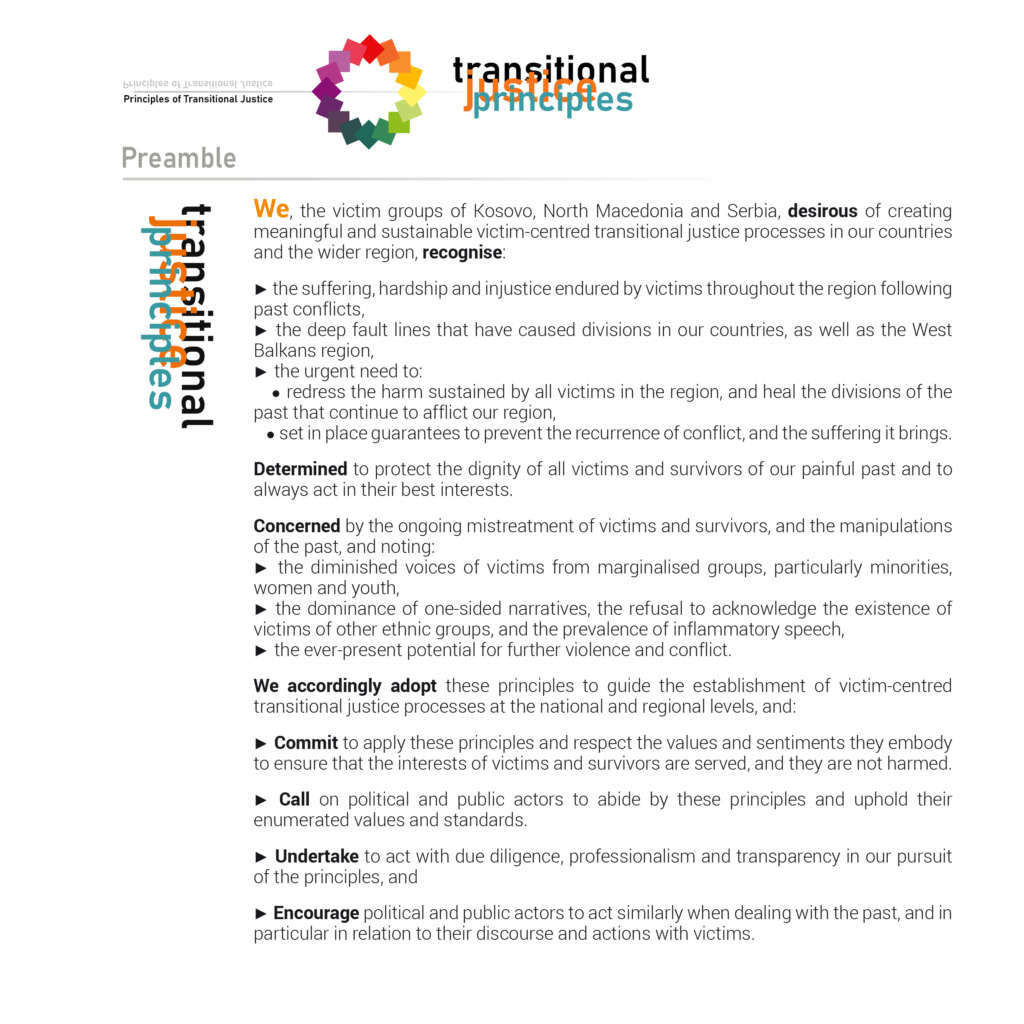
One of the key outcomes of the Strengthening Inclusive Victims’ Voices (SIVV) project was the production of joint sets of locally grounded transitional justice (TJ) principles meaningful to victim groups in North Macedonia, Serbia and Kosovo, as well as at the regional level.
The primary aim was the establishment of victim-centred and practical TJ principles at the national and regional levels in the West Balkans that are relevant to the daily lives of victims.The specific objectives of the principles are set out in detail in the preamble.
It was decided that the ultimate product needed to be short, concise and clear, while encapsulating essential victim values and principles. The underlying rationale was to guide conduct, discourse and communication on victim issues.
SIVV Consortium members from North Macedonia, Serbia and Kosovo worked with victim groups to develop national principles applicable to their needs and context. One of the key questions asked at the national level was: “what is the change and process you would like to see in the future?”
The International Centre for Transitional Justice (ICTJ) provided feedback on the initial drafts and supplied comparative experiences for the consideration of the consortium. Further consultations followed at ground level and revised principles were developed.
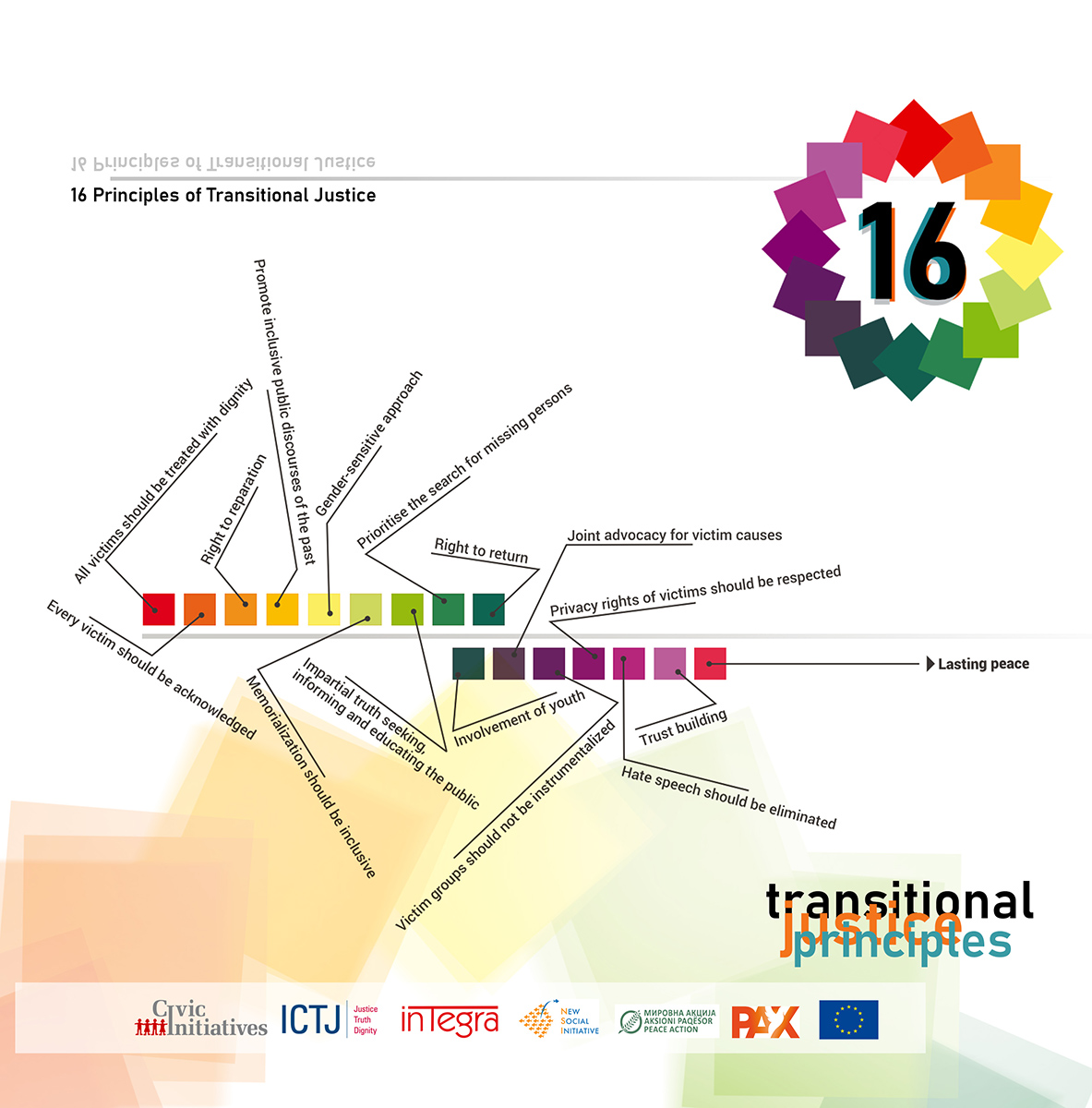
The ICTJ then prepared a draft preamble and consolidated the 3 sets of national principles into a draft set of regional principles. Collective conversations, themes and commonalities were identified. Care was taken to capture all proposed principles from the national level, without introducing repetition.
The principles were considered and debated at the 2nd regional meeting of the SIVV in Prizren between 20 – 21 May 2023.General consensus was achieved, and some modifications were made to the draft principles. The principles were agreed to by those present and adopted by the Consortium. Individual victim groups are free to formally adopt them once their management structures or boards approve them.
The principles can now be used to guide the decisions and choices of victim groups in the West Balkans. They can also become a platform around which victims can unify and mobilize